
Haimeta emerges as a groundbreaking Human-AI creative platform designed to bridge the gap between imagination and execution. By integrating advanced AI technology with intuitive tools, it empowers users to transform simple ideas into diverse creative content—including images, videos, 3D models, and immersive spaces—without requiring technical expertise. Whether you’re an artist, business owner, or student, Haimeta streamlines the creative process, making it accessible, efficient, and collaborative.
1. What is Haimeta?
Haimeta is a cutting-edge Human-AI creative platform built on the principle of “Human + AI collaboration.” Its core mission is to democratize creativity by enabling users to turn ideas into tangible content—such as AI-generated images, videos, 3D objects, and interactive spatial worlds—with ease. Unlike niche tools that focus on single tasks, Haimeta offers an all-in-one ecosystem where advanced AI models work alongside users to interpret prompts, refine outputs, and bring visions to life. Central to its design is accessibility: pre-designed templates, intuitive scenarios, and user-friendly interfaces ensure that even those without technical skills can create professional-grade content. At its heart, Haimeta aims to make creativity a universal tool, not limited by expertise.

2. What is Haimeta for?
Haimeta caters to a broad spectrum of creative needs and users, with applications spanning digital content creation, editing, and innovation. You can generate unique AI images from text prompts (ideal for marketing campaigns or concept art), edit existing images to match creative visions, craft engaging videos/animations from simple text (perfect for social media ads), convert 2D images/logos into high-quality 3D models (usable in gaming or product design), or build interactive spatial worlds for collaboration or storytelling.
Artists and creators leverage it to bypass technical barriers; designers enhance projects with AI-driven tools; brand/content creators produce eye-catching marketing materials; businesses innovate with AI-powered campaigns; and educators/students explore AI creativity for learning.
From pet lovers transforming photos into art to restaurant owners designing logos, Haimeta adapts to nearly any creative goal.
3. Unique features of Haimeta
Feature 1: Ease of Use
Haimeta prioritizes accessibility with its user-friendly interface and guided workflows. Pre-designed templates and intuitive scenarios walk users through each step, from inputting a text prompt to refining outputs. Whether you’re a beginner or expert, the platform eliminates the need for complex technical knowledge, ensuring that creativity—not skill—drives results. Even first-time users can generate polished content in minutes.
Feature 2: Multi-Modal Creativity
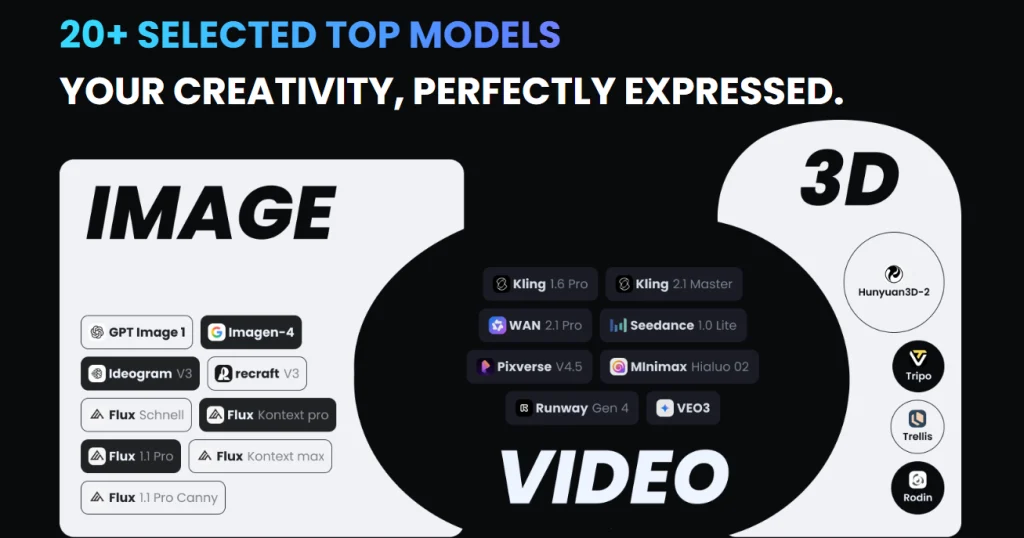
Unlike single-task AI tools, Haimeta supports multi-modal creation, seamlessly integrating images, videos, 3D models, and immersive spaces. Users can generate a product image, edit it, animate it into a video, convert it to 3D, and display it in an interactive world—all within one platform. This versatility eliminates the hassle of switching between tools, streamlining the creative process.
Feature 3: Intuitive Templates & Scenarios
Haimeta offers scenario-specific templates tailored to user needs: pet lovers get artistic poster templates, e-commerce owners access product display tools, and nail artists can generate branded ID photos. These pre-built frameworks reduce guesswork, guiding users to optimal results quickly and ensuring outputs align with real-world use cases.
Feature 4: Interactive Immersive Spaces (HAI Space)
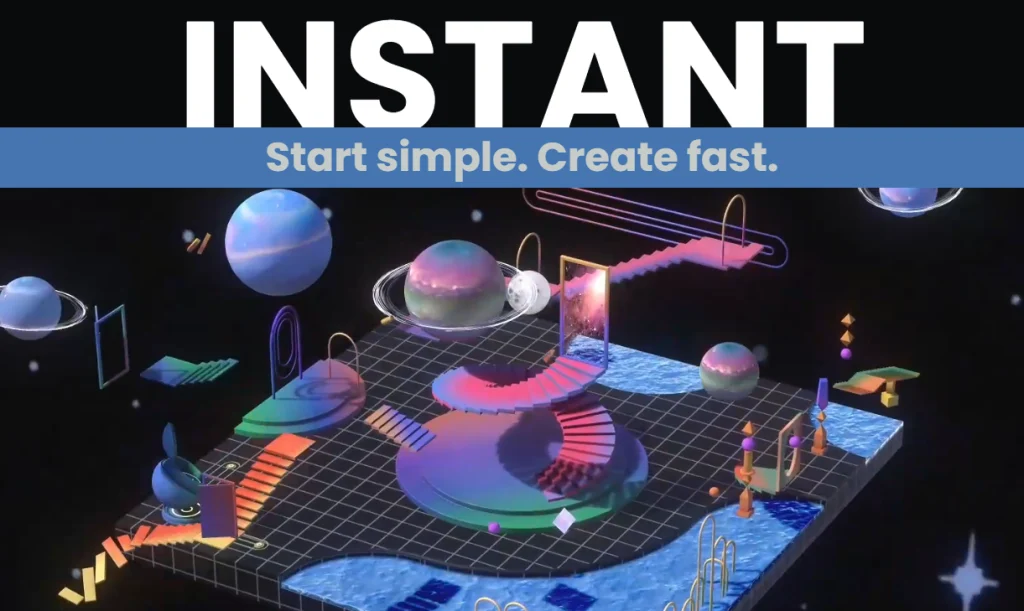
A standout feature, HAI Space lets users build 3D virtual worlds to showcase creations, interact with AI, and collaborate with other creators. Whether activating characters, hosting virtual exhibitions, or designing interactive narratives, this feature adds a dynamic, immersive layer to creativity, transforming static content into living experiences.
Feature 5: Community & Ecosystem
Haimeta fosters a thriving community where users share work, collaborate, and draw inspiration. The platform’s ecosystem grows with user feedback, regularly adding new tools and features. This collaborative environment not only supports skill growth but also turns individual creativity into a collective movement, ensuring Haimeta evolves with its users’ needs.
4. Use case of Haimeta
Consider Mia, a small-batch candle brand owner struggling to create consistent marketing content. With Haimeta, she transforms her workflow: Using text-to-image, she generates “cozy soy candle with lavender scent, rustic jar, warm lighting” for Instagram posts. She edits customer photos with image-to-image to match her brand’s aesthetic. For TikTok, she creates 10-second videos via text-to-video: “Candle burning, soft music, text overlay: ‘Relax & Unwind.’” She converts her logo to a 3D model for product packaging mockups, then builds an interactive HAI Space where customers “virtually smell” candles by clicking—boosting engagement. In weeks, Mia’s content quality and reach improve, all without hiring a designer. Haimeta turns her small business into a visually compelling brand.
5. Similar Alternatives of Haimeta
Alternative 1: MidJourney
A leading text-to-image AI, MidJourney excels at hyper-realistic art and concept generation. However, it focuses solely on images, lacking video, 3D, or interactive space tools—limiting multi-modal creativity compared to Haimeta’s all-in-one approach.
Alternative 2: Runway ML
Runway ML offers video editing, text-to-video, and image-to-3D features, appealing to creators needing dynamic content. But its steeper learning curve and lack of Haimeta’s intuitive templates make it less accessible for beginners.
Alternative 3: Canva AI
Canva AI integrates basic AI tools (text-to-image, templates) into a design platform, great for social media graphics. However, it lacks advanced 3D modeling, immersive spaces, and the depth of Haimeta’s multi-modal capabilities.
Alternative 4: DALL-E 3 (via OpenAI/Bing)
DALL-E 3 is renowned for text-to-image precision, with seamless integration into Bing. Yet it offers no video, 3D, or community features, focusing narrowly on image generation rather than holistic creativity.
Alternative 5: Kaedim
Kaedim specializes in converting 2D images to 3D models, ideal for game developers or product designers. However, it lacks Haimeta’s breadth, offering no image/video generation or interactive space tools—limiting its use to 3D-specific tasks.
Conclusion
Haimeta stands out as a transformative force in the creative tech landscape, blending Human-AI collaboration to make high-quality content creation accessible, versatile, and engaging. By integrating tools for images, videos, 3D models, and interactive spaces into one intuitive platform, it eliminates the need for multiple tools or technical expertise. Whether you’re a small business owner, artist, or educator, Haimeta empowers you to turn ideas into reality—proving that creativity, when paired with AI, has no limits. As AI continues to reshape creativity, Haimeta is not just a tool but a partner, democratizing innovation for everyone.
Create Awesome AI Videos with Mango AI